
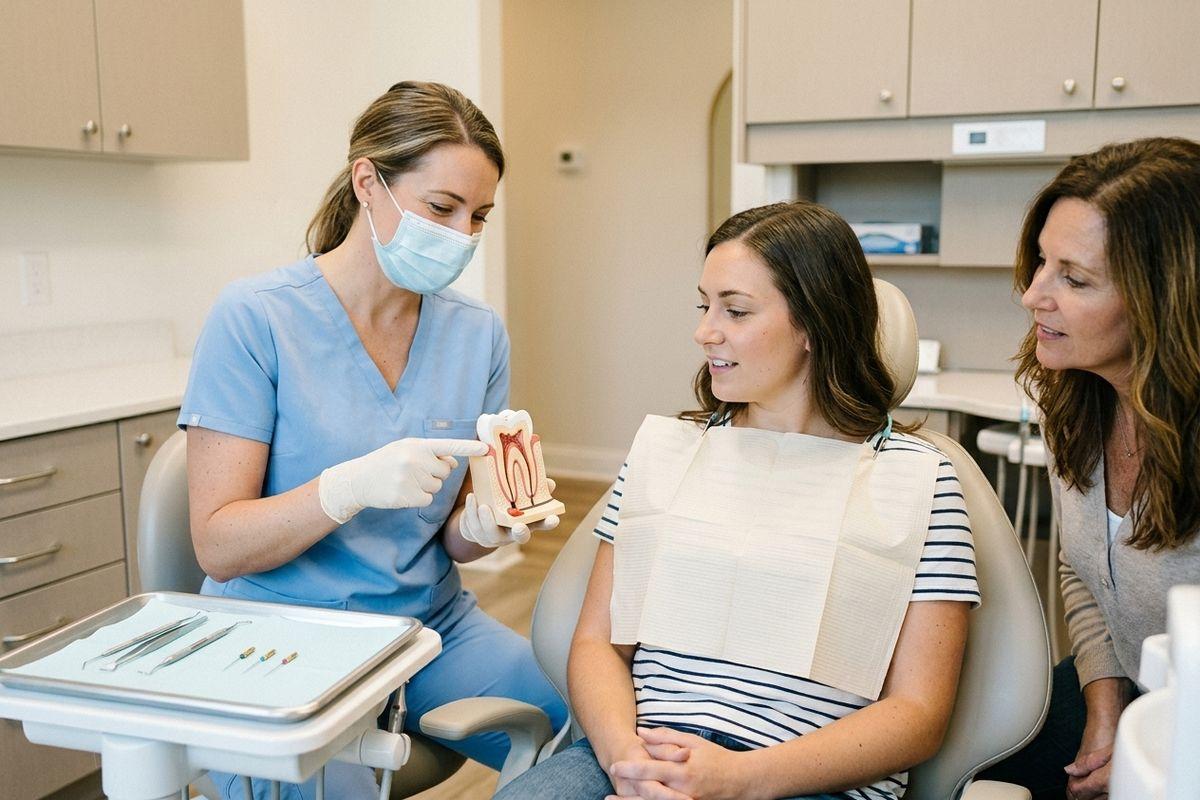
You’ve just had a root canal, and now you’re wondering what comes next. The procedure is done, the tooth is saved, but the question sitting in the back of your mind is: how long until you feel like yourself again? Knowing what to anticipate helps you plan ahead and get back to enjoying your favorite meals in absolute comfort.
For most people, recovery from a root canal takes about 1 to 2 weeks, with the first 3 days being the most noticeable. Once the infection is removed, the healing process begins, and any discomfort should gradually improve. This is the time to focus on preventing the need for another root canal.
What Happens to Your Tooth During a Root Canal
To better understand recovery, it helps to know what happens during a root canal. The procedure removes the infected or inflamed tissue from inside the tooth, then thoroughly cleans and disinfects the root canals before sealing them to help prevent future infection. One of the greatest benefits of root canal treatment is that it allows you to keep your natural tooth rather than having it extracted.
In many cases, the tooth is also restored with a permanent crown during the same appointment to strengthen and protect it. If a crown cannot be placed the same day, a temporary restoration is used until the final restoration is completed. Either way, protecting the tooth after treatment is an important part of ensuring long-term success.
A Closer Look at Your Recovery Timeline
Every patient heals a little differently, but recovery from a root canal is usually predictable. Here’s what most people experience in the hours, days, and weeks after treatment.
The First 24 to 48 Hours
As the numbing medication wears off, you’ll likely notice some tenderness around the tooth. The area may feel sensitive to pressure, and your jaw might feel a little sore from keeping your mouth open during the procedure. This is normal and expected.
Over-the-counter pain relief, like ibuprofen or acetaminophen, can help manage this discomfort. Take it as directed, and try to avoid chewing on that side of your mouth.
Days 3 to 7
By this point, most patients notice a significant improvement in their symptoms. Any lingering soreness or tenderness continues to decrease, and most people have returned to their normal daily activities. Mild sensitivity when chewing may still be present, but it should continue to improve each day.
2 Weeks & Beyond
By the two week mark, most patients have fully recovered and are no longer experiencing discomfort. The tissues surrounding the tooth continue to heal, and you can return to eating and chewing normally. If a follow up visit is needed, your dentist will confirm that everything is healing as expected.
Factors That Affect Recovery Time
Most patients recover from a root canal without any issues, but the exact timeline can vary from person to person. Some of the factors that may affect healing include:
- The severity of the infection: Teeth with significant infection or inflammation may take longer to feel completely comfortable after treatment.
- Which tooth was treated: Molars are often more complex because they have multiple root canals, which can sometimes lead to slightly more post treatment soreness.
- The condition of the tooth: A tooth that had extensive decay, a crack, or a previous infection may require a longer healing period.
- Following your post treatment instructions: Taking any prescribed medications, avoiding chewing on the treated tooth until instructed, and maintaining good oral hygiene all help support a smooth recovery.

Simple Tips to Help You Heal Comfortably
A little extra care goes a long way toward making your recovery time a breeze.
What to Eat & Avoid
For the first few days, stick to soft foods like yogurt, mashed potatoes, soup, and scrambled eggs. These put minimal pressure on the treated tooth and give the area time to calm down.
Skip hard, crunchy, or sticky foods during this time. Things like chips, raw carrots, or chewy candy can put pressure on a tooth that’s still tender and may disturb a temporary filling.
Daily Care Habits
Keep up with your regular oral hygiene routine, but go gently. Use a soft-bristled toothbrush and brush carefully around the treated area. Flossing around the tooth is still a good idea, just be gentle. The right oral hygiene habits during recovery can make a real difference in how quickly you start feeling comfortable again.
Avoid smoking and alcohol while you’re healing. Both can slow the natural healing process and may increase your risk of irritation or complications.
When to Reach Out to Your Dentist
Some discomfort after a root canal is expected. But certain signs mean it’s time to reach out to your dentist rather than wait things out. Contact your dentist if you notice any of the following symptoms:
- Severe pain that gets worse after the first couple of days instead of getting better
- Swelling in your face, gums, or jaw
- Fever or a general feeling that something is off
- A temporary filling that feels broken or loose
- Symptoms that went away and then came back
These signs don’t mean something has gone terribly wrong, but they do mean the dentist needs to take a look sooner rather than later. Getting ahead of any issue makes a difference. Act quickly and keep your smile safe.
Get Back to Enjoying Your Vibrant Smile
Navigating the days after a dental procedure is much easier when you know exactly what to anticipate. Prioritize your rest, stick to soft foods, and give your body the time it needs to bounce back.
You deserve to feel completely comfortable and confident in your oral health. Schedule your next visit and let the friendly team at The Ivory Dental Co. help you maintain a bright, healthy smile.